


Plain Vanilla Cake Recipe
The comforting aroma of a freshly baked vanilla cake fills the kitchen, a promise of simple sweetness and tender texture. This classic plain vanilla cake recipe delivers a beautifully moist crumb and a delicate flavor that is universally loved.
It’s an essential foundation for any baker, offering a versatile base that pairs wonderfully with various frostings and fillings, making it perfect for any celebration or a delightful everyday treat.
Why This Plain Vanilla Cake Recipe Is a Must-Try
This plain vanilla cake recipe stands out for its straightforward approach and consistently delicious results. It’s designed to be an easy vanilla cake recipe that even novice bakers can master with confidence.
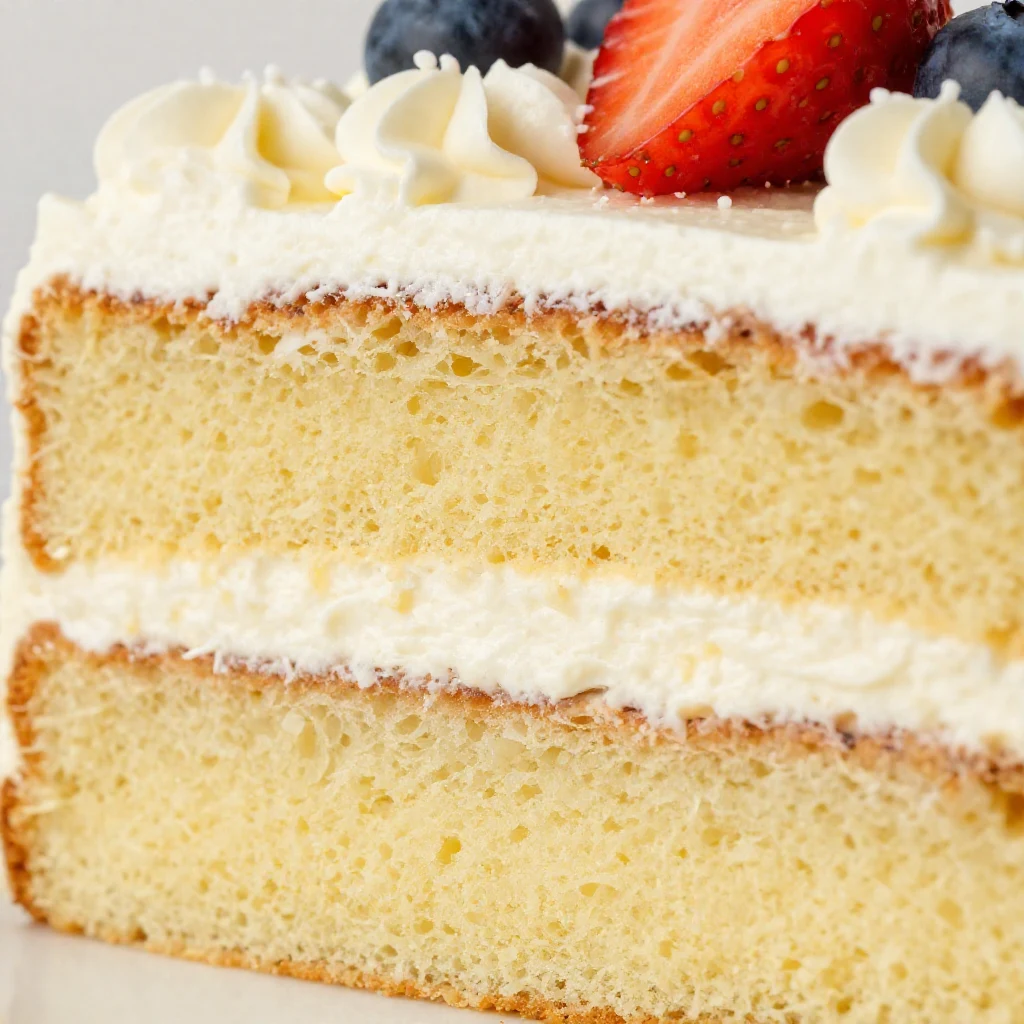
- The cake boasts an incredibly tender and fine crumb, ensuring each bite is soft and melts in your mouth. This texture is a hallmark of a well-made vanilla cake recipe.
- It features a rich, pure vanilla flavor that is prominent without being overpowering, making it a classic dessert. The subtle sweetness balances perfectly with the aromatic vanilla.
- The finished cake is delightfully moist, staying fresh for days when stored properly. This moistness prevents a dry cake, which is a common baking concern.
Essential Ingredients for a Perfect Vanilla Cake
Achieving a truly exceptional plain vanilla cake relies on understanding the role of a few key ingredients. Each component contributes significantly to the final taste and texture of these homemade sweets.
Using 1 cup (2 sticks) of unsalted butter, softened, is crucial for the creaming process. Softened butter incorporates air effectively with the granulated sugar, creating a light and fluffy base that contributes to the cake’s tender crumb and moistness. Overly cold butter will not cream properly, while melted butter can result in a dense cake.
Pure vanilla extract, specifically 1 tablespoon, is the heart of the vanilla cake recipe. Opting for pure extract over imitation vanilla ensures a deep, authentic vanilla flavor that truly shines. This ingredient is key to making it a standout among vanilla desserts.
Bringing your 4 large eggs and 1 cup of whole milk to room temperature is a small but significant step. Room temperature ingredients emulsify more easily with the creamed butter and sugar, creating a smoother, more uniform batter. This leads to a more consistent bake and a lighter, more tender texture, helping to avoid a sunken cake or dense cake.
Baking Your Plain Vanilla Cake: A Step-by-Step Guide
Creating this plain vanilla cake recipe begins with proper preparation. First, preheat your oven to 350°F (175°C) and prepare two 8-inch round cake pans by greasing and flouring them, or lining them with parchment paper. This vital step ensures your cakes release cleanly and prevents the cake sticking to pan, a common issue in easy baking recipes.
Next, combine the dry ingredients: in a medium bowl, whisk together the 2 ½ cups sifted all-purpose flour, 1 tablespoon baking powder, and ½ teaspoon salt. Sifting the flour helps to aerate it and prevent lumps, contributing to a smoother batter and a more even crumb in your moist cakes. Set this mixture aside.
In a large bowl, use an electric mixer to cream together the softened unsalted butter and 2 cups of granulated sugar for about 3-5 minutes. This process, known as creaming, incorporates air into the mixture, which is essential for a light and fluffy cake texture. Continue mixing until the mixture is light in color and fluffy.
Add the 4 large eggs one at a time, beating well after each addition to fully incorporate them. Scrape down the sides of the bowl as needed to ensure all ingredients are evenly mixed. After the eggs are incorporated, beat in the 1 tablespoon of pure vanilla extract, infusing the batter with its signature flavor.
Now, gradually add the dry ingredients to the wet ingredients in three additions, alternating with the 1 cup of whole milk. Begin and end with the dry ingredients. Mix on low speed just until combined after each addition; it is crucial not to overmix the batter. Overmixing develops the gluten in the flour too much, which can lead to a tough or dry cake.
Divide the batter evenly between the two prepared cake pans and smooth the tops with a spatula. This ensures both cakes bake at a similar rate and have a uniform appearance. Even distribution helps prevent one cake from being underbaked while the other is overbaked.
Bake the cakes for 28-32 minutes, or until a wooden skewer inserted into the center comes out clean. The cakes should be golden brown and spring back when lightly touched. An underbaked cake might sink in the middle, while an overbaked cake can become dry, so monitoring the baking time is important for these easy cake recipes.
Once baked, remove the cakes from the oven and let them cool in the pans for 10-15 minutes. This allows the cakes to firm up slightly before you attempt to move them, reducing the risk of breakage. After this initial cooling, invert them onto a wire rack to cool completely. Cooling completely before frosting is vital to prevent the frosting from melting.
Once completely cool, your plain vanilla cake is ready to be frosted as desired with your favorite vanilla buttercream or other frosting. This classic dessert is now ready to be enjoyed. Explore other cake variations like our fun Chocolate Cake Pops.
Serving and Decorating Your Vanilla Cake
A plain vanilla cake recipe provides a versatile canvas for various serving and decoration ideas. The simplest approach is to frost it with a classic vanilla buttercream, allowing the cake’s flavor to truly shine.
For a touch of freshness, consider garnishing the frosted cake with fresh berries like raspberries or sliced strawberries. A light dusting of powdered sugar can also add an elegant finish without much effort. Craving a different flavor? Try our recipe for The Best Strawberry Cake Ever.
Common Questions About Plain Vanilla Cake
Q: Why did my plain vanilla cake sink in the middle?
A: A sunken cake can often be attributed to opening the oven door too early, incorrect oven temperature, or overmixing the batter. Ensure your oven temperature is accurate and avoid opening the door during the first two-thirds of the baking time, and always mix ingredients only until just combined to prevent gluten overdevelopment.
Q: How should I store my plain vanilla cake to keep it fresh?
A: An unfrosted plain vanilla cake can be stored at room temperature, tightly wrapped, for up to 2-3 days. A frosted cake, especially with dairy-based frosting, should be covered and refrigerated for up to 5 days, or frozen for longer storage of up to 2-3 months. Always ensure the cake is completely cool before wrapping to avoid condensation.
Simple Substitutions for Your Vanilla Cake
While this vanilla cake recipe is designed for optimal results, minor adjustments can sometimes be made. For instance, if whole milk is unavailable, you can use 2% milk, though it might result in a slightly less rich cake.
For those seeking a deeper vanilla presence, consider using vanilla bean paste in place of pure vanilla extract. This swap often provides visible specks of vanilla bean and a more intense aromatic profile in your vanilla desserts.

Plain Vanilla Cake Recipe
Ingredients
Method
- Preheat your oven to 350°F (175°C). Grease and flour two 8-inch round cake pans, or line with parchment paper.
- In a medium bowl, whisk together the sifted flour, baking powder, and salt. Set aside.
- In a large bowl, using an electric mixer, cream together the softened butter and granulated sugar until light and fluffy, about 3-5 minutes.
- Add eggs one at a time, beating well after each addition. Scrape down the sides of the bowl as needed. Beat in the pure vanilla extract.
- Gradually add the dry ingredients to the wet ingredients in three additions, alternating with the milk, beginning and ending with the dry ingredients. Mix on low speed until just combined after each addition; do not overmix.
- Divide the batter evenly between the two prepared cake pans. Smooth the tops with a spatula.
- Bake for 28-32 minutes, or until a wooden skewer inserted into the center comes out clean. The cakes should be golden brown and spring back when lightly touched.
- Remove cakes from the oven and let them cool in the pans for 10-15 minutes before inverting them onto a wire rack to cool completely.
- Once completely cool, frost as desired with your favorite vanilla buttercream or other frosting.
Notes
Loved this recipe? Save it to your favorite Pinterest board so you can easily find it later! ✨